

Nobody warned you that the longer you’re a nonprofit leader, the more confusing it could get.
Not in a bad way, necessarily. But in the way that anyone who has led a nonprofit organization for more than a few years knows: The job has a way of defying the logic you brought into it. The things that should work sometimes don’t. The moves that look counterintuitive often turn out to be the right ones. And the leaders who seem to have it figured out are usually the ones who’ve stopped expecting leadership to be straightforward.
That’s what a paradox is. Not a contradiction. Not a riddle. It’s a truth that initially looks like it shouldn’t be true, until you’ve lived enough of it to understand why it is.
The seven paradoxes below are not theoretical. They show up in board rooms and budget conversations and staff one-on-ones and donor meetings. They are drawn from some of the oldest and most reliable observations about human nature, leadership, and organizations, and they are as applicable to the nonprofit leader running a $500,000 community organization as they are to the one leading a $50 million institution.
Read them slowly. Sit with the ones that create friction. Those are usually the ones that matter most.
______
The Growth Paradox
The culture you’re building, the donor pipeline you’re nurturing, the community trust you’re earning: none of it compounds in ways you can measure month to month. The leaders who make it are almost never the most talented. They’re the ones who didn’t quit during the long middle.
The Icarus Paradox
The thing that got your nonprofit to where it is today is often the thing keeping it from where it needs to go next. The hard part is staying honest about which of your greatest organizational strengths is currently functioning as a ceiling.
The Failure Paradox
Nonprofit leaders operate in a culture deeply allergic to failure, partly because funders have historically punished organizations that admit things didn’t work. But failure that gets examined is how organizations get better, and the teams that never fail are the ones that never try anything hard enough to matter.
The Hamlet Paradox
Some of the most important decisions a nonprofit leader makes look wrong in the short term: the beloved staff member who needed to go, the donor whose restricted gift didn’t serve the mission. These decisions are almost always costly in the moment and right in the long run.
The Say No Paradox
Nonprofit leaders are among the most generous people in any professional category, and that generosity is frequently the source of their most significant operational problems. The leaders who build the most focused organizations have gotten genuinely comfortable with no as an act of mission clarity, not selfishness.
The Control Paradox
Micromanagement in the nonprofit sector almost always comes from a good place, and it almost always produces the opposite of what the leader intends. The organizations where staff feel genuine ownership and leaders lead through clarity rather than oversight are the ones that retain talent, scale programs, and produce sustainable impact.
The Fear Paradox
For most nonprofit leaders, the things that would most advance the mission are sitting just on the other side of a conversation they’ve been postponing or a decision they’ve been softening. The risk of inaction compounds just as surely as the risk of moving forward. It just does it quietly, in ways that are easy to rationalize until they aren’t.
______
On our team, we say these paradoxes above are not problems to be solved, but tensions to be managed. are tensions to be navigated. The leaders who understand that tend to lead differently. Not more cautiously, but more wisely. Not with less conviction, but with more curiosity about what the situation actually requires.
If one of these landed harder than the others, that’s probably the one worth sitting with longest.
And if you’re in a season where the paradoxes feel especially acute, where leadership feels heavier than it should and the path forward is less clear than you’d like, that’s usually not a sign that something is wrong. It’s often a sign that you’re leading something that actually matters.
That’s worth something. Keep going.
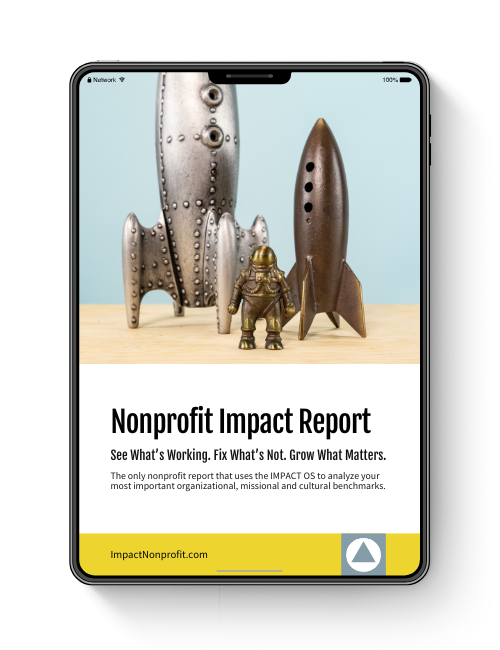
👉 Get your free Nonprofit Impact Report
It’s a quick, practical tool that gives you a snapshot of where your organization is thriving and where it’s stuck. After taking our proprietary 5-minute survey, you’ll walk away with a custom report—and more importantly, a few next steps you can actually take.
No jargon. Just clarity. Because your nonprofit doesn’t need another inspirational quote. It needs a system that helps you turn vision into victory.
👉 [Get your report by taking the 5-minute survey now]